Beautifully Hand Made
6 Kitchen Storage Problems And How To Solve Them
MADE IN FROME, SOMERSET

Even compared to walk-in wardrobes or utility cupboards, kitchens are the one room in every house where your choice of storage solution matters most, and you need a combination of closed cupboards, drawers and open scaffold board shelving to use the space properly.
A perfectly designed kitchen harmonises both utility and beauty, something that we appreciate with our 15 years of experience using scaffold boards and other industrial materials to do both.
The right kitchen storage solutions not only make the space easier to work in, but they also
make your kitchen look better by reducing clutter and help you to feel good about the space. The better a room makes you feel, the more you will want to be there.
However, the wrong kitchen storage can have the precise opposite effect, even if you cannot always pinpoint why that is the case. Something just seems out of place, you have to strain to get whatever you need, and nothing is where it should be because there is no order to anything.
Thankfully, all of this can be solved with the right furniture choices, the right storage options and the right troubleshooting mindset. Figure out what specifically feels wrong and what would fix it for you.
To help out with this, here are six of the most common problems with kitchen storage in our professional (and personal) experience, and what we can recommend in order to fix them.


Not Taking Advantage Of Vertical Space
A common problem with kitchen design is that they are often designed as a one-size-fits-all solution regardless of the height of the people using it or the height of the kitchen itself.
From a practical standpoint, this can lead to people running low on space despite the fact that the room looks large enough to feel empty.
This is actually a common issue in industrial lofts, because their open-plan design and huge room sizes often lead to certain parts of your home becoming more cluttered than others.
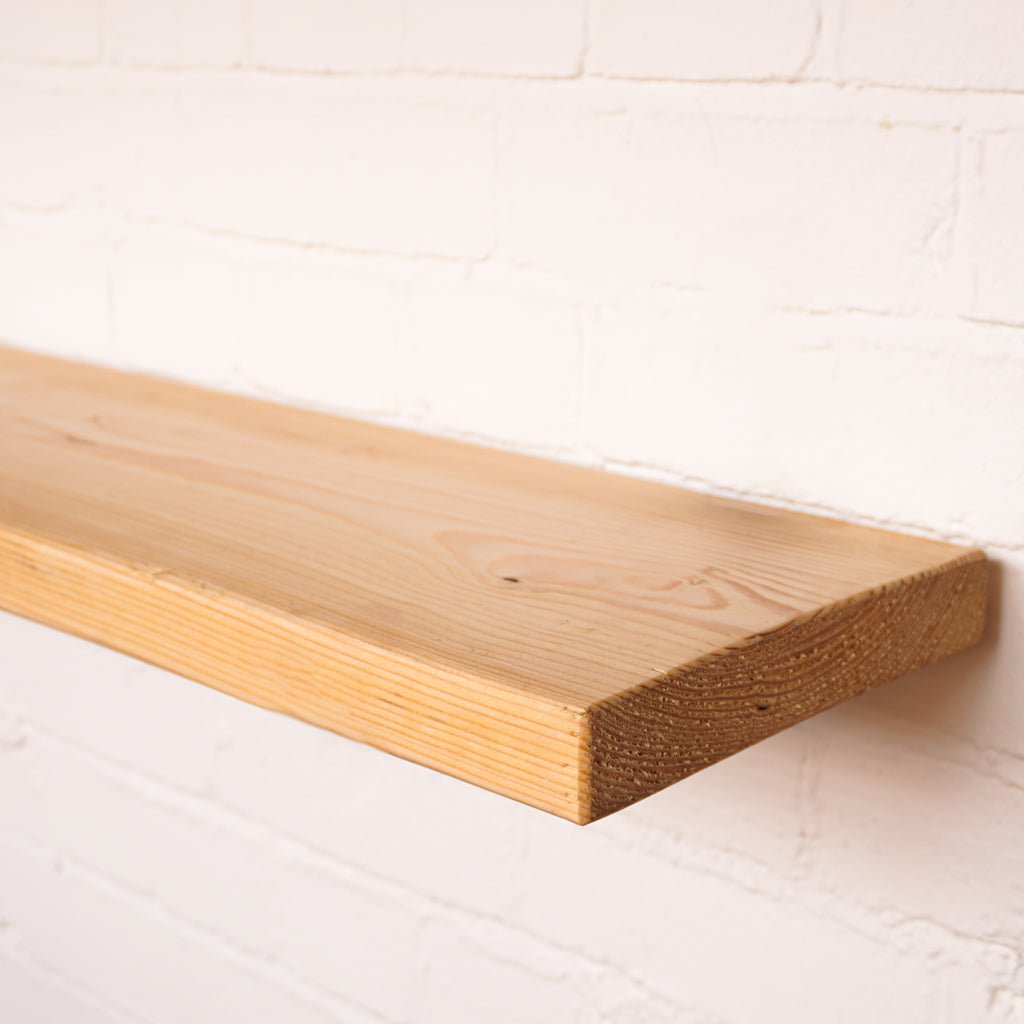
The simplest and best solution to this is to build upwards. If you are using lengthy scaffold boards for robust open shelving, add another one above it, and one above that.
If you have a tall kitchen, a ladder or set of kitchen steps is not only essential but adds to the uniqueness of your kitchen’s design.
Overstuffing Drawers, Cabinets And Shelves
We are mentally affected by clutter irrespective of which room it is in, but kitchens are the main room in the house where clutter can affect nearly every aspect of your experience.
The big mistake we commonly make is not taking a systematic approach to how we store pots, pans, cutlery, crockery, utensils and all the bits and pieces we need to take advantage of a kitchen to its fullest extent.
This is not always a case of lacking enough storage, especially given that deep drawers are a common feature in most kitchens. Instead, it is a problem of not having the right storage solutions for your needs and improvising as best you can.
The consequence, as many homeowners have suffered over the years, is storage that feels cluttered and yet insufficient, and the problem is not how much storage you have but how you use it.
Thankfully, a combination of shelving and some DIY space-saving solutions using pieces of pallet wood and a set of screw-in hooks can provide elegant solutions.
Use a hanging rack or holder for your utensils and store according to priority; everything that you expect to need on a regular basis should be within easy reach, whilst other appliances and tools you use now and again for recipes can be placed further away.
Surfaces That Become A Magnet For Clutter
Kitchens move in mysterious ways; they often are calm, quiet and still before erupting into a rapid concert of multitasking, cooking, cleaning, preparing, managing pans and keeping an eye on multiple timers.
Because of this, it is not uncommon that surfaces end up becoming the temporary home for many of your kitchen utensils. The problem is that over time, the culmination of frantic cooking nights and quick dinners turns a temporary resting place into a pile of clutter on work surfaces.
As with the problem with overstuffed drawers, the problem is not necessarily an issue with storage amount but storage type, and it highlights the importance of having chunky rustic shelves to hand, as well as hanging racks, trays and storage bins.
Hard To Reach Cupboards And Shelves
There are two philosophies when it comes to designing a kitchen: build it for the person who is likely to use it, or build it for the dimensions of the room itself and the location of immovable utilities.
The latter is often cheaper and easier to implement, but it comes with the problem that some shelves are much harder to reach than others.
The best way around this is to analyse your existing kitchen and divide each shelf, drawer and cupboard into those which are comfortable and practical to use everyday and those better served for long-term storage or for decoration.
Once you do this, you may also realise that, in real terms at least, you do not have as much storage space as you need, which is where adding additional shelves comes in handy.
Alternatively, if you want to keep using hard-to-reach shelves, one option is to use trays or boards as a way to organise and group different items, as well as make them easier to reach.
Kitchen Storage That Doesn’t Fit Your Workflow
Ultimately, kitchen storage is as part of the kitchen triangle as your stove, sink and fridge. Make sure that any storage solutions make sense for the appliances they are near, everything is easy to reach, and they do not obstruct your day.
Choosing Form Over Function With Kitchen Storage Solutions
Think about practicality first when designing your kitchen. Some types of cabinets and cupboards look truly gorgeous but are far more impractical than you might expect in practice.
Ready to bring an authentic rustic industrial feel to your kitchen? Explore our scaffold board furniture collection and see how each handcrafted piece is built from a timeless heritage of practical aesthetic design.
Featured product




DIY CORNER DESK
The Scaff Shop works with customers on many levels. Some need more time, tools, or necessary skills; no matter the reason, you can purchase everything you need, and it can be delivered to your door as a finished product. Some customers have the time, skills and tools that may want to build your corner desk, and that is cool with us, too! What we have offered below is a list of the products required to make your perfect corner desk.
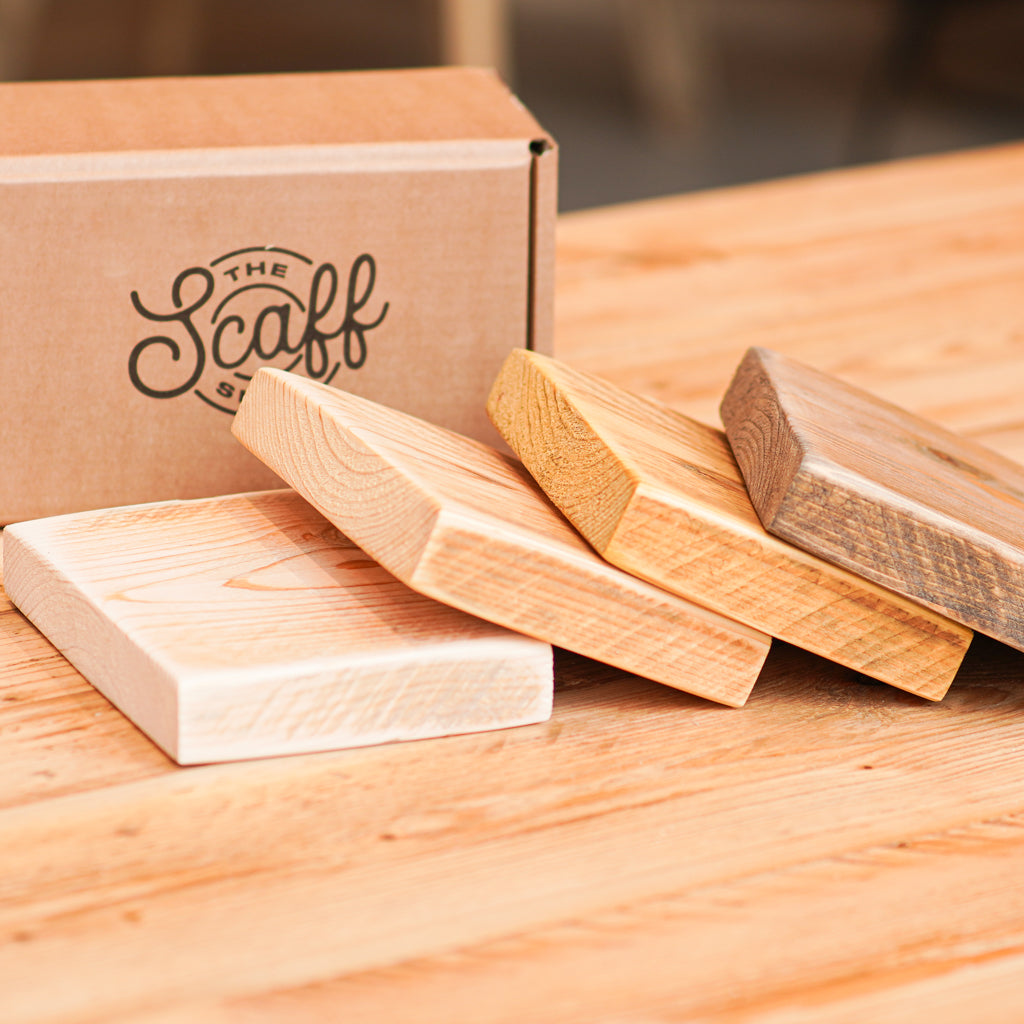
First up are the Scaffold Boards. One thing to remember when buying reclaimed scaffold boards is that they have previously been used. The life-altering wear and tear changes to those boards make them unique compared to new boards. For this, you will need four six-foot boards and two two-foot boards. Once the boards have been cut and joined together using biscuits, glue, and clamps, they will make the desktop. Sounds easy. Well, I'm sure there will be some sweat and tears before you finish.
Once the desktop is joined, you can start the finishing process by rubbing it down and selecting the type of oil you want to use to finish your desk. The last part is deciding what legs you want to use with your desk, which depends on the look you are going for.